

 Español
  Français
  Deutsch
  Italiano
  Português
  Українська
  Русский
  Türkçe
  Polski
  Nederlands
  Čeština
  Svenska
  עברית
עברית  العربية
  فارسی
فارسی  简体中文
简体中文  日本語
日本語  한국어
한국어  हिन्दी
  Melayu
  Indonesia
  Tiếng Việt
 Ultrasonic Generator
Showing 1–30 of 77 results
-
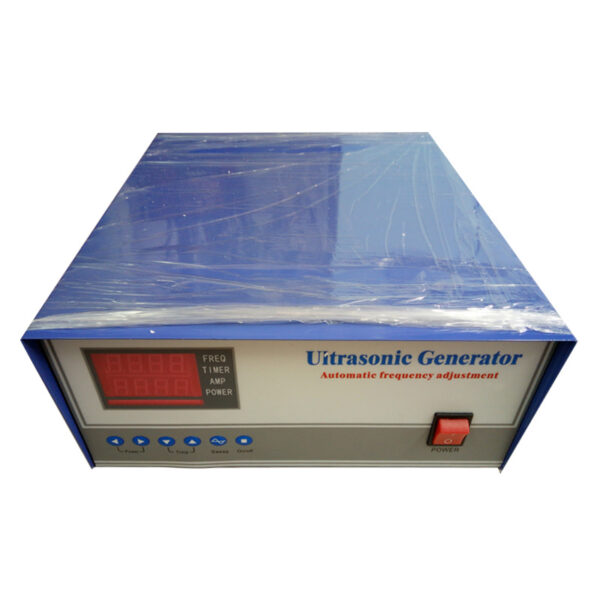
Digital Ultrasonic Generator (14)
-

Ultrasonic Transducer Driver Circuit (23)
-
![[100-120V] Ultrasonic Transducer Driver Circuit & Transducer Bundles](https://www.bjultrasonic.com/wp-content/uploads/2014/03/100-120V-Ultrasonic-Transducer-Driver-Circuit-Transducer-Bundles-Above-60W-600x600.jpg)
[100-120V] Ultrasonic Transducer Driver Circuit & Transducer Bundles (13)
-
![[200-240V] Ultrasonic Transducer Driver Circuit & Transducer Bundles](https://www.bjultrasonic.com/wp-content/uploads/2014/05/200V-240V-Ultrasonic-Transducer-Ultrasonic-Generator-2-600x600.jpg)
[200-240V] Ultrasonic Transducer Driver Circuit & Transducer Bundles (13)
-
![[100-120V/200-240V] Ultrasonic Transducer Driver Circuit & Transducer Bundles](https://www.bjultrasonic.com/wp-content/uploads/2013/07/Digital-Ultrasonic-Transducer-Driver-Circuit-Transducer-Bundles-1-600x600.jpg)
[100-120V/200-240V] Ultrasonic Transducer Driver Circuit & Transducer Bundles (7)
-

Digital Ultrasonic Transducer Driver Circuit & Transducer Bundles (7)

Industrial ultrasonic systems rarely fail because the tank is made from the wrong stainless steel or because the basket design looks unusual. More often, the trouble starts in the power chain. A generator that is poorly matched to the transducer load, difficult to tune, or limited in control flexibility can turn a promising cleaning process into an unstable one. For industrial buyers, the ultrasonic generator category is where process stability, retrofit practicality, and long-term operating consistency begin.
What An Ultrasonic Generator Category Covers
An ultrasonic generator is the electronic power source that drives an ultrasonic transducer set. It converts incoming electrical power into a high-frequency output signal matched to the resonant behavior of the transducer. In a cleaning system, that electrical output becomes mechanical vibration at the transducer, then acoustic energy in the liquid, and finally cavitation at the part surface.
For buyers, this category usually covers more than one buying path. Some projects need a finished digital ultrasonic generator for a complete tank system or retrofit. Others need a board-level ultrasonic transducer driver circuit for OEM assembly, service replacement, or integration into a compact machine. There are also matched generator and transducer bundles for customers who want a more direct path to compatibility and commissioning.
That distinction matters. Procurement teams are often comparing supplier scope, integration risk, and spare-parts planning. Process engineers are usually focused on resonance matching, usable power control, and whether the generator can support the cleaning behavior the tank needs. Maintenance managers tend to care about repeatable restart, fault protection, and how easily the power supply can be swapped into an existing line.
How Ultrasonic Generators Work in Practice
In practical terms, the generator does three jobs. First, it receives plant power and conditions it. Second, it creates a high-frequency electrical output suitable for the target ultrasonic application. Third, it manages the interaction between the power stage and the connected transducer so useful acoustic energy is delivered instead of wasted as heat, instability, or electrical stress.
The working relationship between generator and transducer is central to the whole system. The generator drives the electrical side, while the piezoelectric ultrasonic transducer converts that signal into mechanical vibration. In cleaning systems, that vibration creates alternating pressure waves in the liquid. When those waves are properly developed, cavitation forms and collapses in a controlled way, producing the cleaning action described in the ultrasonic cleaner overview.
This is why industrial buyers pay close attention to capabilities such as automatic frequency tracking, sweep operation, digital power adjustment, timing control, and protective functions against excess current or overheating. These are not cosmetic features. They affect whether a line starts consistently, whether cavitation is evenly distributed, and whether the equipment remains stable when load conditions change.
For example, a generator with automatic frequency tracking helps the system stay close to the transducer’s useful operating point instead of forcing manual retuning every time process conditions shift. Sweep operation can help reduce standing-wave effects in cleaning tanks. Adjustable power gives operators room to soften the process for sensitive parts or push harder against heavier contamination. In day-to-day production, those functions translate into fewer process surprises.
Why Industrial Buyers Choose This Category
Buyers usually come to this category with one of several operational goals in mind.
- Replace or upgrade an aging power supply without rebuilding the full tank system.
- Match new transducers to a fresh cleaning line or OEM assembly.
- Improve process repeatability with better digital control and frequency management.
- Add flexibility for mixed workloads through dual-frequency or three-frequency operation.
- Reduce commissioning risk by buying matched generator and transducer bundles.
- Standardize spare parts and service strategy across multiple machines or markets.
That makes ultrasonic generators important well beyond their electrical role. A suitable generator affects cleaning coverage, transducer life, ease of retrofit, control integration, and the consistency of results from batch to batch. In many plants, replacing the generator is one of the fastest ways to stabilize an ultrasonic process without replacing the full mechanical system.
Digital generator families are especially relevant when a line needs repeatability, easier setup, visible operating feedback, or cleaner integration with timed and semi-automatic processes. Driver circuits can be the more practical route where the equipment builder already controls the housing, wiring architecture, or machine-level logic and only needs the ultrasonic power stage.
How To Choose The Right Model Or Configuration
The fastest way to narrow the choice is to confirm the application, the transducer side, and the integration conditions before comparing individual units. An ultrasonic generator that looks suitable on paper can still be the wrong choice if the frequency band, load, input supply, or control architecture do not align with the actual system.
| Selection Point | What To Confirm | Why It Matters |
|---|---|---|
| Generator only or matched bundle | Whether existing transducers will be reused, or whether a new matched set is preferred | Reduces mismatch risk and affects commissioning time |
| Frequency strategy | Lower-frequency cleaning, higher-frequency precision cleaning, or multi-frequency flexibility | Determines cavitation character and process range |
| Total transducer load | Number of transducers, target power class, and expected duty cycle | Sets the required output class and thermal margin |
| Input supply | 100-120V, 200-240V, or broader compatibility needs | Avoids avoidable site-power and export-market issues |
| Control requirements | Need for timer functions, power adjustment, sweep, or external control integration | Influences repeatability, operator convenience, and automation fit |
| Installation environment | Cabinet space, ventilation, splash exposure, and cable routing | Directly affects reliability and service life |
For retrofits, the first question is usually whether the installed transducers are still in good condition and whether their operating frequency is known with confidence. If the transducers are proven and the goal is to restore or improve the power source, a generator-only purchase may make sense. If the original transducers are aging, undocumented, or inconsistent, a matched bundle often removes uncertainty.
Frequency choice also deserves careful attention. Lower-frequency cleaning bands are commonly chosen when buyers want stronger cavitation for heavier soils and robust parts. Higher-frequency systems are more often selected for finer cleaning, smaller features, or more delicate surfaces. Dual-frequency and three-frequency solutions can be useful when one line must handle both aggressive cleaning and gentler finishing steps.
Power should be treated as a system-matching decision, not a marketing number. More power is not automatically better. The useful question is whether the generator can drive the full transducer load efficiently and repeatably without operating at the edge of its practical limit.
Where These Generators Fit In Real Industrial Applications
Cleaning Tanks And Retrofit Systems
The most common buying scenario is industrial ultrasonic cleaning. Here, the generator supports single-tank units, larger process tanks, or multi-stage cleaning lines. Maintenance teams often replace a failing analog unit with a digital generator to recover process stability. OEMs and system integrators may specify driver circuits or bundled electronics and transducers for new tank builds.
Precision Cleaning And Delicate Parts
Higher-frequency generator options are relevant when the target is finer contamination on smaller features, precision-machined parts, optics-related components, or other applications where the cleaning process must be effective without being unnecessarily aggressive. In these cases, stable control and frequency discipline matter as much as raw output.
Medical Device And Clinical Cleaning Workflows
Ultrasonic power supplies are also selected for medical and clinical cleaning equipment where repeatable removal of soils from instruments and complex geometries is important. The distinction here is essential: ultrasonic cleaning supports the cleaning stage and can improve the condition of the item before later steps, but cleaning is not the same as sterilization.
Printing, Surface Treatment, And Process Equipment
Industrial buyers in printing and related process sectors may use ultrasonic systems for components such as rolls and other hard-to-clean geometries where uniform acoustic activity is important. In broader ultrasonic equipment portfolios, generator and driver technologies also support welding, atomization, and liquid-processing systems when matched to the correct transducer and tooling.
Installation And Integration Considerations
A well-chosen ultrasonic generator still needs a sensible installation approach. Many field issues blamed on the generator are actually caused by poor system integration.
- Confirm frequency compatibility between the generator and every connected transducer before startup.
- Treat wiring quality, connector integrity, and cable routing as part of the ultrasonic system, not as an afterthought.
- Provide adequate ventilation and keep the power electronics away from splash zones, chemical mist, and contamination.
- Check whether the machine needs simple local operation or integration with external timing, line control, or interlocks.
- For export or multi-region projects, confirm input power expectations early so the selected bundle matches the destination supply.
- In retrofits, review the full acoustic package, not just the electronics. Tank construction, bonded transducers, and load condition all affect performance.
For OEMs, compact driver circuits can be the right choice when the machine architecture, enclosure, and user interface are already defined elsewhere in the system. For standalone industrial equipment, a finished digital generator may be the more efficient path because it simplifies installation, operator access, and replacement planning.
What Affects Performance In Daily Operation
Strong ultrasonic performance depends on more than the nameplate. In real use, the generator succeeds when it remains properly matched, properly cooled, and properly tuned to the actual process.
Several factors have an immediate effect on results:
- Frequency match between generator and transducer.
- Stable electrical connections and good grounding.
- Sensible power setting for the part material, soil load, and cleaning stage.
- Use of sweep or frequency-management functions where tank acoustics would otherwise create uneven cleaning zones.
- Solution chemistry, temperature, and degassing discipline in cleaning applications.
- Basket loading, part density, and how the workload changes the acoustic field.
- Thermal management, especially in long-duty industrial operation.
When these variables are handled well, the outcome is not just “more ultrasonic power.” It is better cleaning coverage, more repeatable batches, easier troubleshooting, fewer nuisance shutdowns, and improved service life for both generator and transducer components. For plants that run multiple shifts, that operational consistency is often more valuable than marginal headline output.
Product Range For Different Buying Paths
Beijing Ultrasonic’s generator family supports several practical purchasing routes rather than a single one-size-fits-all format.
Digital Generator Units For Standalone System Builds
Digital ultrasonic generator options are the clearest fit for industrial cleaning tanks, line retrofits, and purpose-built ultrasonic equipment that needs front-panel control, visible operating status, and better process repeatability. Visible examples in the range include lower-frequency high-power units for below 45 kHz duties, higher-frequency units for above 50 kHz work, and multi-frequency models such as double-frequency and three-frequency digital generators.
Driver Circuits For OEM And Service Work
Ultrasonic transducer driver circuits are relevant where the buyer needs the power electronics without a separate standalone cabinet format. This can suit OEM integration, equipment repair, compact machine design, or applications where the builder manages the enclosure, logic, and operator interface at machine level.
Matched Bundles For Faster Commissioning
Matched generator and transducer bundles are especially useful when buyers want to reduce uncertainty around compatibility. The product family includes options grouped around 100-120V, 200-240V, and wider input compatibility paths. For distributors, export teams, and integrators, that can simplify quoting and reduce risk during installation.
Power And Frequency Options For Different Cleaning Priorities
Visible examples within the range span smaller 300W-class units up to higher-power 2400W-class generators, alongside above-50-kHz and below-45-kHz product families. That is commercially important because not every tank, transducer set, or cleaning target needs the same power density or cavitation profile. Buyers can align the generator more closely with tank size, contamination level, and part sensitivity rather than trying to force one output class across every job.
FAQ
What Is The Difference Between An Ultrasonic Generator And A Driver Circuit?
An ultrasonic generator usually refers to the complete power supply unit used to drive ultrasonic transducers, often with a user interface, power adjustment, timing, and protective functions. A driver circuit is the core electronic drive stage, typically used where an OEM or service team is integrating the ultrasonic function into a larger machine.
When Should I Buy A Generator Only Instead Of A Generator And Transducer Bundle?
Buy a generator only when the installed transducers are known, healthy, and correctly documented. Choose a matched bundle when transducer condition is uncertain, when building a new system, or when commissioning speed and reduced compatibility risk matter more than reusing legacy parts.
How Important Is Frequency Matching?
It is fundamental. The generator must operate in a way that suits the resonant behavior of the connected transducer set. Poor matching can reduce power transfer, create unstable operation, raise heat, and shorten component life.
Is A Higher Power Rating Always Better?
No. The better question is whether the generator is correctly sized for the total transducer load and the intended duty cycle. Oversimplifying selection around the highest available wattage can lead to poor control, unnecessary cost, or stress on the acoustic system.
When Does Dual-Frequency Or Three-Frequency Operation Make Sense?
Multi-frequency operation is attractive when one system must handle different cleaning priorities, such as heavier contamination on one part family and finer finishing on another. It can also help contract manufacturers, maintenance departments, and mixed-production environments avoid buying separate dedicated systems for every job type.
Can These Generators Be Used In Medical Cleaning Equipment?
They can be part of medical or clinical cleaning systems when matched to the correct transducers and process design. The key distinction is that ultrasonic action supports cleaning by removing soils and contaminants. It does not replace sterilization or validated disinfection steps where those are required.
What Usually Causes Unstable Cleaning Performance In An Ultrasonic System?
Common causes include poor generator-transducer matching, weak electrical connections, inadequate ventilation, overloaded or aging transducers, inconsistent solution conditions, or tank acoustics that create uneven cavitation. The ultrasonic generator FAQs are useful when reviewing practical operating questions and failure modes.
What Information Should A Buyer Prepare Before Requesting A Quotation?
At minimum, it helps to provide the intended application, whether the system is new or a retrofit, the transducer frequency or target cleaning band, the total transducer count or load, site input power, control requirements, and whether a generator-only solution or a matched bundle is preferred. That reduces back-and-forth and makes technical alignment much faster.
Choosing an ultrasonic generator is ultimately a system decision, not a standalone electrical purchase. The right unit has to match the transducer side, fit the power environment, support the intended process, and stay stable through real operating conditions. Beijing Ultrasonic’s generator category covers that full decision space, from digital standalone generators to driver circuits and matched bundles, giving industrial buyers a practical route whether the goal is a new build, a retrofit, or a more controlled ultrasonic process.